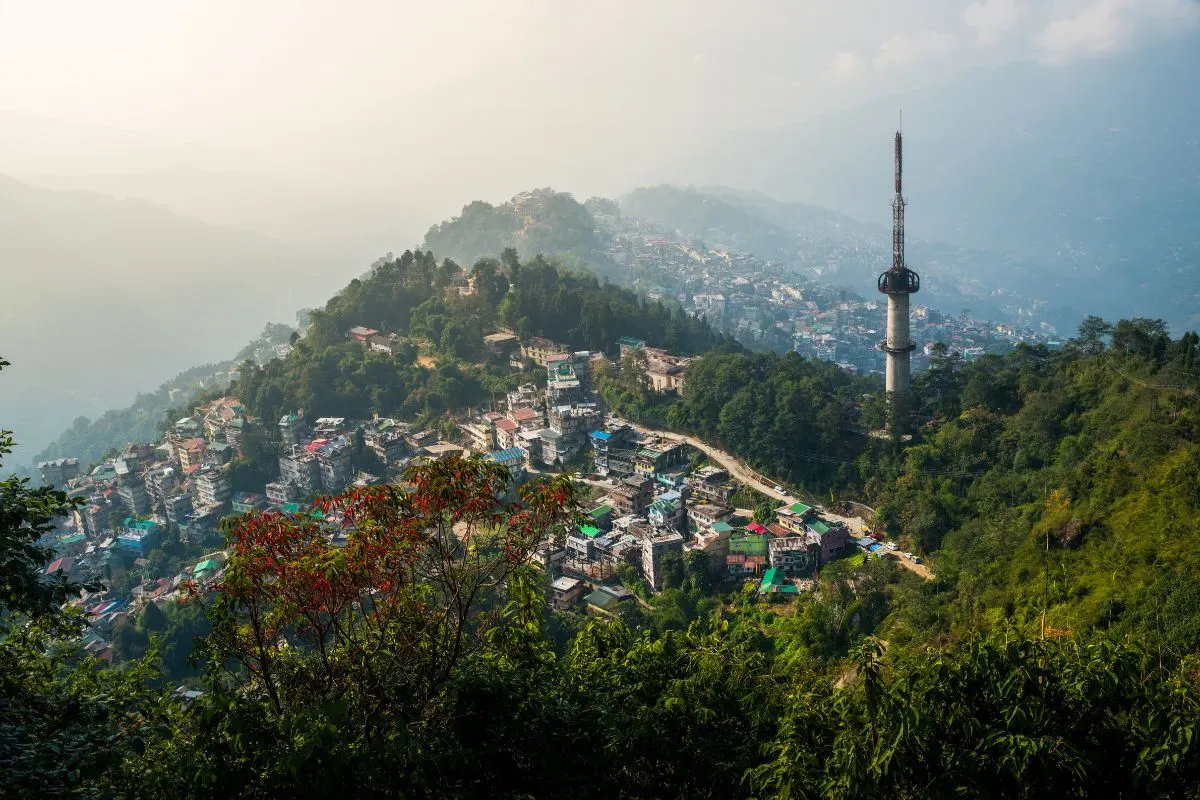
Best time
October to early December and March to June are the best months: clear Kanchenjunga views and dry roads in the autumn, rhododendrons in the Yumthang Valley and mild days in spring. December to February is cold, with snow at Tsomgo Lake and in North Sikkim, and July to September is the monsoon, when landslides can close the hill roads, North Sikkim in particular.
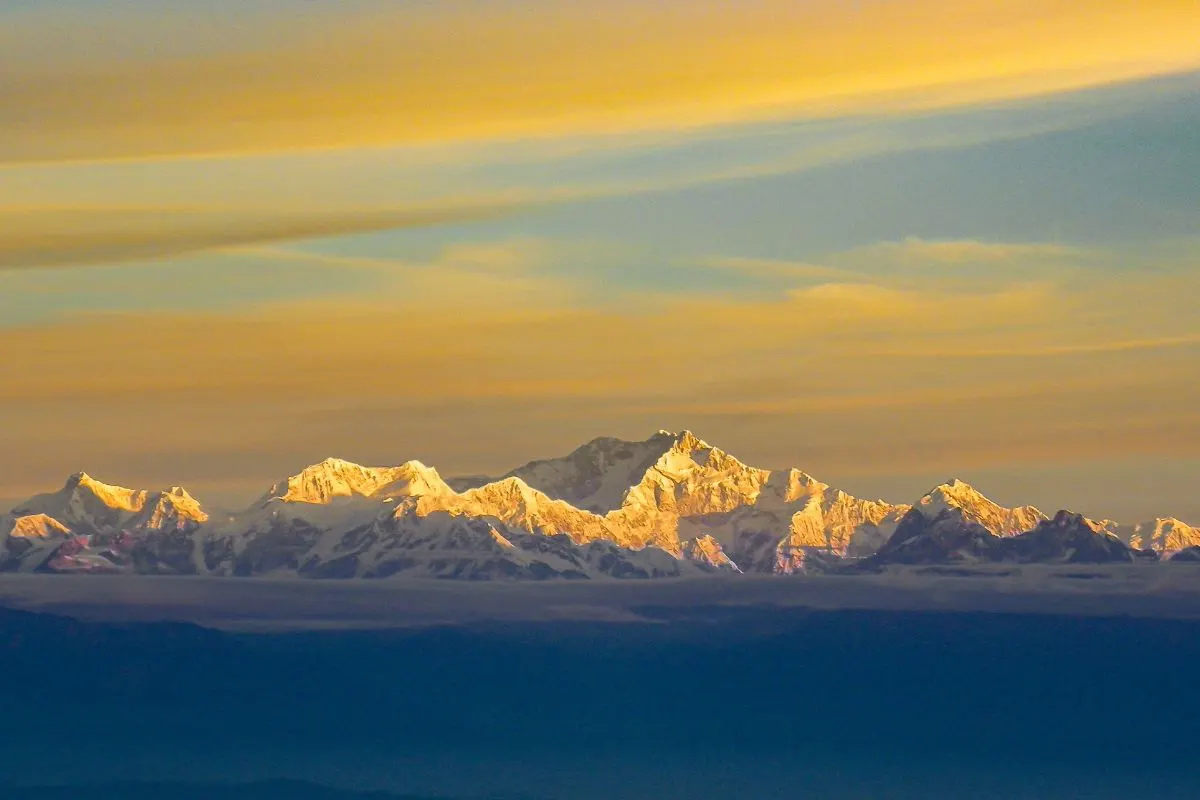
- October to December, 5 to 20°C: The best window for views: dry roads and the clearest Kanchenjunga mornings from Tiger Hill and Pelling. The Puja and Diwali weeks and Christmas to New Year are the busiest; snow starts at Tsomgo and up north in December.
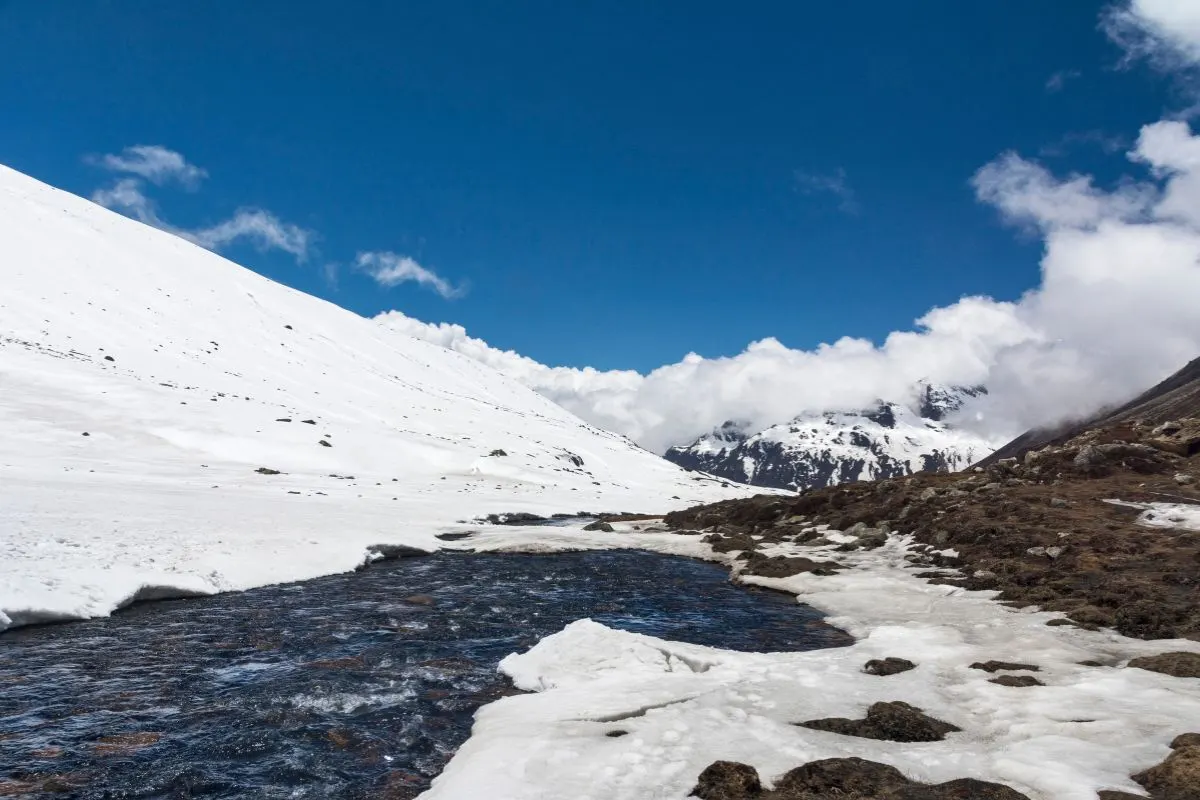
- January to February, 0 to 15°C: Cold and quiet, with snow at Tsomgo Lake, Nathula and Lachung; heavy snowfall can close the high roads for a day or more, so North Sikkim plans stay flexible.
- March to June, 10 to 25°C: Spring and early summer: rhododendrons in the Yumthang Valley in April and May, mild days in Gangtok and Darjeeling, and the school-holiday crowds from May. Haze can hide the peaks on some days.
- July to September, 15 to 25°C: The monsoon: heavy rain, mist over the views and landslides that can close the hill roads, North Sikkim in particular, so plans need a spare day.
What to pack
Layers in every month: a warm jacket, thermals, gloves and a woollen cap for Tsomgo Lake, Nathula and North Sikkim, which are cold even in summer and well below freezing from December to March; a fleece or light jacket is enough for Gangtok and Darjeeling from March to June. A rain jacket and quick-dry shoes from June to September, sunglasses and sunscreen for the snow and the high sun, motion-sickness tablets for the long hill drives, and a government photo ID with a few passport-size photos for the permits.
Getting there
From Hyderabad, fly to Bagdogra, the airport for Siliguri: as of September 2026 there are two daily non-stops of about 2 hours 15 to 30 minutes, and one-stop flights through Kolkata or Delhi otherwise. Your private cab meets you at Bagdogra or at NJP railway station, and Gangtok is about four to five hours up the hill road. The train to NJP takes well over a day, so most travellers fly.
From Bengaluru, fly to Bagdogra: as of September 2026 there is one early-morning non-stop of about 2 hours 50 minutes, and the other options connect through Kolkata, Delhi or Hyderabad. The trip starts at Bagdogra or NJP railway station with a private cab, and Gangtok is about four to five hours by road from there.
From Chennai, fly to Bagdogra through Kolkata or Hyderabad; as of September 2026 booking sites showed no non-stop, and the quickest one-stop journeys took about six hours. The trip starts at Bagdogra or NJP railway station with a private cab, and Gangtok is about four to five hours up the hill road.
Permits and fees
Indian citizens need no permit to enter Sikkim, only a government photo ID. Tsomgo Lake, Baba Mandir and Nathula in East Sikkim, and Lachen, Lachung, Yumthang and Gurudongmar Lake in North Sikkim, are protected areas: a permit is usually issued only through a registered tour operator, with a photo ID and a few passport-size photos, and the trips that go there arrange it for you; each trip page says whether the permit fee is in the price. Nathula is open to Indian citizens only, usually closed on Mondays and Tuesdays and subject to the weather and army clearance, so it is an add-on on the day. Foreign nationals need a Restricted Area Permit to enter Sikkim and some high areas stay closed to them; tell the planner before booking. Rules change, so confirm before you book.